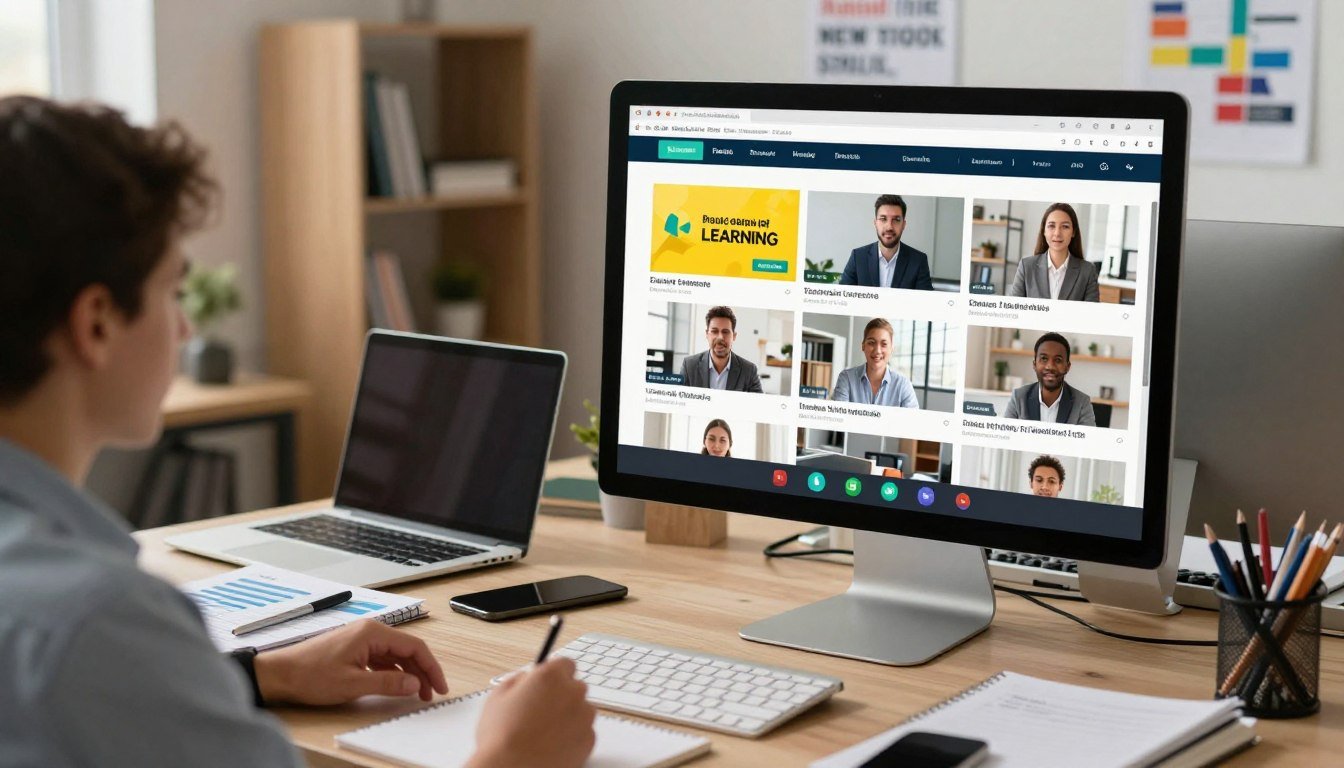
The digital age has transformed how we gain knowledge. A leading marketplace for this change connects millions with expert instruction. Udemy hosts a vast library of on-demand video courses.
You can explore topics from business to creative arts. The model is built for flexibility. Self-paced learning lets you study on your own schedule. This saves valuable time for busy professionals and curious learners.
This review provides a factual analysis of the user experience. We will examine how Udemy works, its pros and cons, and pricing. Our goal is to help you make an informed learning investment.
It is a skill-based hub, not a degree-granting school. For students seeking practical knowledge, it stands as a major player in online learning.
Key Takeaways
- Udemy is a massive global marketplace for video-based courses.
- It offers incredible flexibility with self-paced, on-demand learning.
- Courses cover a wide range of professional and personal skills.
- This review will analyze the platform’s value for different student goals.
- Udemy is designed for skill acquisition, not formal academic credit.
- Understanding the pricing model is key to maximizing your investment.
- The learning experience varies by instructor and course quality.
What is Udemy? An Introduction to the Learning Marketplace
Beginning as a virtual classroom project in Turkey, what would become a global education marketplace found its initial codebase far from Silicon Valley. Founder Eren Bali first developed the software to provide live, online instruction. This early work caught the attention of co-founders Gagan Biyani and Oktay Çağlar.
The trio moved to California to launch their venture formally. On May 11, 2010, they established what is now a major education technology (edtech) company. It operates a massive open online course (MOOC) marketplace.
At its heart, Udemy functions as a two-sided marketplace. It connects instructors who create content with students seeking knowledge. This model empowers experts worldwide to share their skills.
Learners benefit from an enormous catalog of practical subjects. The company maintains a significant global presence today. Offices operate in the United States, Australia, India, Ireland, Mexico, and Turkey.
Content is accessible in multiple languages, including English, Spanish, and Hindi. This multilingual support broadens its reach to diverse users. The platform became a public company traded on Nasdaq (UDMY) in 2021.
A key evolution occurred in 2025 when Coursera acquired the business. This move signaled consolidation in the online education sector. The typical course format remains video-based and on-demand.
Students enjoy self-paced learning focused on real-world skill development. This practical approach defines the platform’s value proposition for millions.
How the Udemy Platform Works
Understanding the mechanics behind the vast course library reveals a powerful, instructor-driven ecosystem. Udemy is built on a simple but effective principle: connect those who know with those who want to learn.
This creates a dynamic and ever-expanding catalog of skills. Let’s break down the key processes that make it function.
The Instructor-Led Marketplace Model
This learning hub operates as a pure marketplace model. The company does not employ the teachers you learn from. Instead, it provides the digital infrastructure.
Experts act as independent creators. They use the platform to sell their knowledge directly to a global student body. This direct connection is the core of the business.
Anyone with verifiable expertise can become an instructor. This openness fuels the massive variety of courses available. It is a true two-sided network.
Course Creation and Publishing
Instructors begin by developing a detailed curriculum for their topic. They then record video lessons, which form the backbone of the content.
Supplementary resources like quizzes, assignments, and downloadable materials are added. These tools help reinforce the learning for students.
The publishing process is designed to be accessible. Once a course is built, instructors submit it for a basic quality review. This check ensures video and audio standards are met.
There is no formal accreditation for teachers on the platform. The open policy prioritizes breadth of topics over strict credential checks. This means students must research instructor backgrounds.
Revenue Sharing for Instructors
How do instructors earn money? They receive a percentage of each sale, known as a revenue share. The exact rate depends on how the student found the course.
If an instructor brings in a student via their own promotion, they keep a larger share. Sales generated through the platform’s marketing efforts result in a different split.
Top-performing instructors have earned significant income. The platform provides valuable data tools to help creators succeed.
Instructors get access to Marketplace Insights. This data shows trending skills and student demand. It guides them in creating relevant courses.
The instructor’s job continues after publishing. They are expected to update their content and actively answer student questions in the Q&A section.
This model creates a huge and dynamic library. However, it also leads to natural variability in course quality and depth of expertise.
Key Advantages of Using Udemy
For prospective students, the value proposition is built on several clear and compelling benefits. These strengths center on scale, cost, access, and flexibility.
Massive Course Variety and Subject Matter
The platform hosts an unparalleled library of over 200,000 courses. This breadth covers everything from in-demand tech skills like programming to creative arts and personal development.
You can find deep training on almost any topic. This makes it a one-stop shop for curious learners.
Affordable Pricing and Frequent Sales
Individual course purchases are the standard model. List prices are often deeply discounted during frequent sales.
These promotions commonly bring costs down to a very accessible $10-$20 range. This pricing strategy makes quality education available without a large upfront commitment.
It is different from a mandatory monthly subscription. You only pay for what you want to learn.
Lifetime Access to Purchased Courses
This is a major benefit for students. When you buy a course, you own it forever.
Your access never expires. Instructors often update their material, and you receive those improvements at no extra cost.
There are no recurring fees. This provides lasting value from your educational investment.
Mobile Learning with iOS and Android Apps
Dedicated mobile apps transform any location into a classroom. The official app for iOS and Android devices is a powerful tool.
You can download video lectures for offline viewing. This is perfect for commutes or travel.
Your progress syncs automatically across phone, tablet, and computer. This seamless integration supports continuous learning.
Diverse Pool of Instructors and Perspectives
The marketplace thrives on its global community of instructors. Experts from various industries and countries share their knowledge.
This diversity brings a wide range of professional experience and teaching styles. You can learn practical software techniques from a working developer.
You might study business strategy from a seasoned executive. Before buying, you can preview course content to assess the instructor’s style.
Many courses also offer subtitles in more than one language. This expands access for international learners.
The entire online learning structure is self-paced. It accommodates busy schedules by letting students control their time.
You can speed through familiar sections or revisit complex material as needed. This flexibility is core to the platform’s experience for millions.
Potential Drawbacks and Considerations
While the marketplace offers immense opportunity, its open nature introduces several important considerations for students. The model that enables low costs and huge variety also means you must be a savvy shopper.
Understanding these potential downsides helps you navigate the catalog effectively. It ensures your learning investment pays off with useful skills.
Variable Instructor Expertise and Verification
The platform does not have a strict credentialing process for teachers. Anyone with knowledge can create a course. This means expertise levels vary widely.
Students must rely on reviews, ratings, and instructor bios to gauge real-world experience. There is no universal verification of professional backgrounds.
This openness empowers diverse voices. Yet it places the research burden on the learner. Always check an instructor’s listed qualifications and previous work.

Inconsistent Course Quality and Content Standards
There are no enforced universal standards for content depth or production quality. One course might feature polished videos and structured projects.
Another on the same topic could be poorly organized. The platform does not mandate a standardized curriculum or teaching method.
This inconsistency affects the learning experience. Production values, lesson structure, and supplemental materials can differ drastically.
The catalog’s sheer size can feel cluttered. Finding the best option requires careful comparison of previews and student feedback.
Risk of Outdated Material in Fast-Changing Fields
Instructors may not update their courses regularly. This is a critical risk in fields like software development and digital marketing.
Technology tools and best practices evolve quickly. A course recorded two years ago might teach outdated methods.
Always check the “Last Updated” date on the course landing page. This simple step saves time and frustration.
Look for instructors who announce a history of updates. This signals a commitment to current content.
The platform’s 30-day refund policy offers some protection. If a course does not meet advertised quality, you can request your money back.
These factors mean you must take a more proactive research approach. Compare sample lessons, read recent reviews, and verify update timelines.
This diligence ensures you select relevant, high-value courses for your time and goals.
Udemy Pricing: Plans, Subscriptions, and Real Costs
To maximize value, learners must decode the real costs behind advertised prices. The platform uses several distinct models to fit different goals.
Your choice depends on how you learn. Are you a focused student or an exploring professional? Does your entire team need training?
Understanding the details prevents budget surprises. It also ensures you pick the most economical path for your skill development.
Individual Course Purchases (The “Deal” Pricing Model)
This is the classic way to buy. You pay once for lifetime access to a specific course. List prices often show figures like $199.
These high numbers are rarely the actual cost. A frequent sale strategy brings real pricing down to a range of $10 to $30.
This creates a strong perception of getting a major deal. For the occasional learner, it’s a low-risk way to start.
You own that course forever, including future updates. It’s perfect for mastering one specific product or skill.
Udemy Personal Plan Subscription
The subscription model offers a different value proposition. For about $35 per month, you get unlimited access.
An annual payment reduces the cost significantly. It averages around $14 per month when billed yearly.
This plan opens thousands of courses for a flat fee. It includes special tools like AI coding exercises.
Certification prep materials are also part of the package. This is ideal for dedicated students who consume lots of content.
The math is simple. If you finish two or more courses monthly, the subscription likely saves money.
Udemy Business and Enterprise Plans
Organizations have different needs. Business plans are built for teams and entire companies.
The Team Plan costs about $360 per person each year. It provides admin analytics and curated learning paths.
Managers can assign courses and track progress for all users. The content is filtered for professional relevance.
This means some informal topics are excluded. The focus is on job-critical skills in tech, leadership, and management.
For larger organizations, Enterprise and Leadership Academy plans exist. These require custom quotes.
They offer deeper integration, advanced reporting, and dedicated support. The goal is aligned online learning at scale.
Choosing the right model is a personal calculation. Occasional learners benefit from targeted, one-time purchases.
Heavy users and companies find more value in a subscription. Always consider your learning pace and goals before deciding.
This clarity turns pricing from a confusion point into a strategic advantage for your education.
The Udemy Learning Experience and Features
Moving beyond the catalog, the actual student journey is defined by a suite of interactive tools. This environment is designed for practical skill building. It turns video content into an engaged learning process.
The features support different styles of online learning. They help learners stay on track and prove their new knowledge.
Course Structure: Bite-Sized Video Lectures
Every course is broken into short, manageable video modules. Most lessons are under ten minutes long.
This format respects your time and attention span. You can complete a module during a coffee break.
The dashboard presents lessons in a clear, sequential order. This logical flow makes complex topics easier to digest.
The video player itself is a powerful tool. You can adjust playback speed, use closed captions, and view full transcripts.
A five-second skip button lets you quickly review material. These controls put you in charge of the pace.
Interactive Elements: Q&A, Quizzes, and Exercises
Passive watching is not enough for mastery. The platform builds active participation into the experience.
Each course has a dedicated Q&A section. Students can post questions for the instructor or peers.

Regular quizzes test your understanding of key concepts. Hands-on exercises and projects let you apply software skills immediately.
Many classes include downloadable resources like code files and templates. You practice with real-world tools.
Progress Tracking and Completion Certificates
A visual progress tracker shows how much you’ve finished. It displays a completion percentage for the entire course.
This system syncs across all your devices via the mobile app. You can stop on your laptop and resume on your phone.
The platform remembers where you left off. This makes it easy to fit learning into a busy schedule.
Finishing a course grants you a certificate of completion. While not an accredited credential, it has real value.
You can add this certificate to your LinkedIn profile or resume. It shows prospective employers your initiative and new product knowledge.
Udemy AI Assistant and Skill Development Tools
A newer feature called the Udemy AI Assistant launched in 2024. This chat-based tool provides personalized support during your experience.
It can answer course-related questions and clarify tricky concepts. The assistant also helps map the skills you learn to career goals.
Additional resources enhance the journey. Many courses offer built-in coding exercise environments.
You can take notes directly within the content player. These tools are designed for learners who want deep, practical understanding.
Top Udemy Alternatives for Skill Development
Skill development doesn’t end with one marketplace. Several competitors offer distinct advantages. Your choice depends on your goals for credentials, teaching style, and budget.
Exploring other learning platforms can unlock specialized tools. Some focus on interactive design skills. Others provide corporate professional development.
This review compares three major options. We will look at their models, strengths, and ideal users. This helps you make an informed decision for your education.
Uxcel: Interactive Learning for UX and Product Management
Uxcel is a specialized learning platform for designers and product managers. It uses a gamified approach with quizzes and challenges. This makes the courses learning process highly engaging.
The platform focuses on UX design, product management, and AI topics. It offers structured career paths and portfolio projects. This builds a cohesive journey for development in these fields.
Uxcel operates on a subscription model. You pay a monthly fee for all-access. This contrasts with the mixed purchase model of other marketplaces.
The subscription includes interactive lessons and skill assessments. It is ideal for learners who want a focused, hands-on path. You gain practical skills for the tech industry.
LinkedIn Learning for Professional Business Skills
LinkedIn Learning provides a corporate-style library. It features polished video courses in business, creative arts, and software. The content often integrates directly with LinkedIn profiles.
This platform is popular in corporate training environments. Many organizations provide subscriptions to their employees. The quality of production is more uniform across courses.
You will find structured learning paths for professional development. Topics range from leadership to specific software tools. The teaching style is professional and polished.
A potential drawback is cost. If your employer does not provide access, individual subscriptions can be higher. It is a strong choice for career-focused students seeking reputable management training.
Coursera for Accredited Certificates and Degrees
Coursera partners with top universities and companies. It is the go-to for learners seeking formal recognition. The platform offers certificates, specializations, and even online degrees.
This academic rigor sets it apart. Some courses have scheduled sessions with deadlines. This provides more structure than fully on-demand models.
The credentials hold weight with employers. You can earn professional development certificates from institutions like Google and IBM. University partnerships add academic credibility.
This contrasts with the informal, open-marketplace approach. Coursera’s model suits students who value accredited credentials. It requires a greater time commitment and often a higher investment.
Checking reviews for specific specializations is wise. The instructor quality is typically high due to university affiliations.
In summary, your ideal platform depends on your primary need. The first marketplace excels in affordability and sheer variety.
Uxcel is best for interactive design and product skills. LinkedIn Learning supports corporate professional development. Coursera is the choice for accredited certificates and degrees.
Evaluate your learning style and career objectives. Each learning platform offers a unique path to skill mastery.
Conclusion: Is Udemy Worth the Investment?
Concluding our analysis, we weigh the evidence to answer the central question: does this investment deliver tangible returns?
The platform is an unparalleled resource for affordable, self-paced skill acquisition. Its massive course library covers practical topics. You gain lifetime access and mobile convenience.
A global instructor community offers diverse perspectives. This enriches the learning experience.
Significant caveats exist. Careful vetting is needed due to inconsistent quality. Technical subjects risk outdated content.
For self-motivated learners seeking specific, applied skills, it is worth the investment. Those needing structured paths or formal credentials should consider alternatives like LinkedIn Learning.
Use this review to assess your goals. Make an informed decision about your online education.
For millions of students, this marketplace has proven valuable for career advancement despite imperfections.